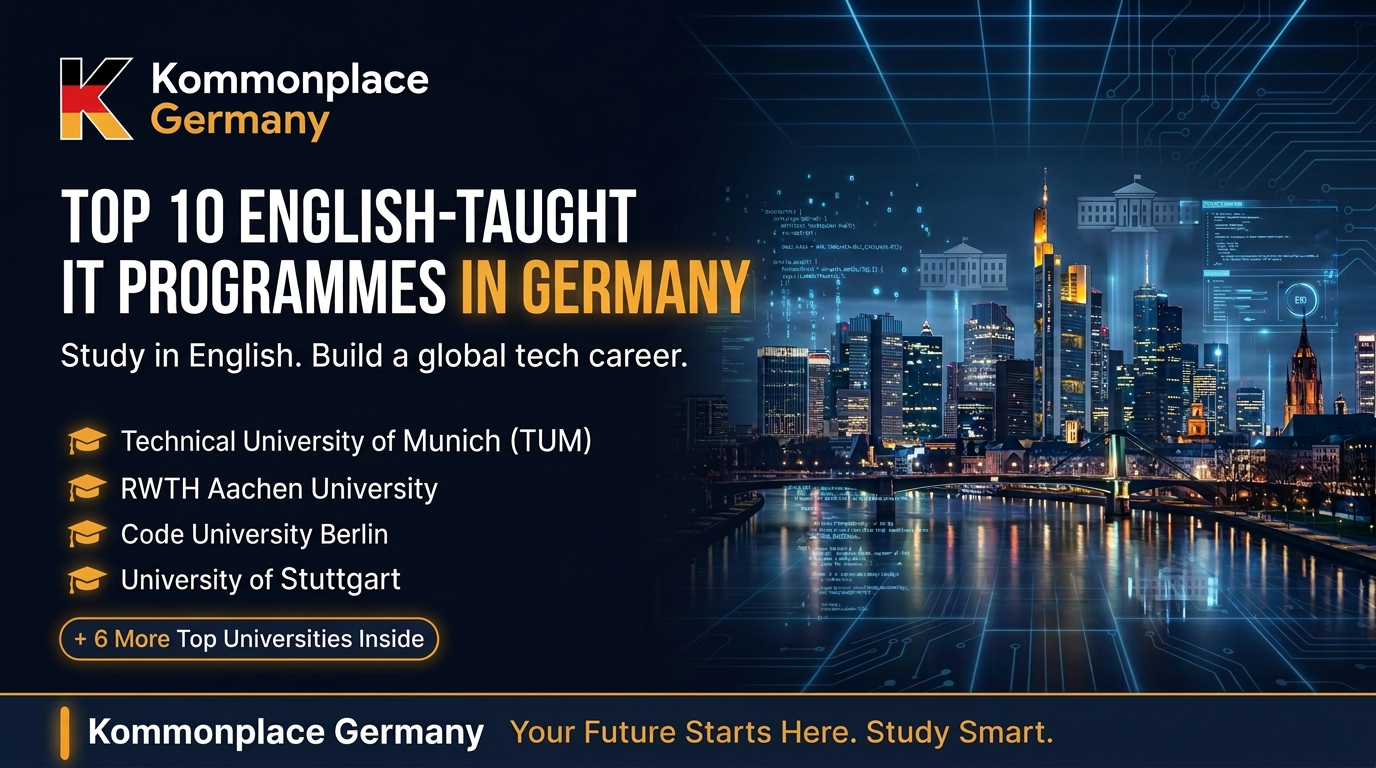
Top 10 English-Taught IT Programmes in Germany
The Best Universities, Specialisations, Career Opportunities & Salary Potential
Read Part 1 First: Why Studying IT & Technology in Germany Is the Smartest Career Move in 2026: Your Gateway to the German Job Market
In Part 1, we explored why Germany continues to face a significant shortage of IT professionals and why the country’s digital transformation creates outstanding opportunities for international students.
Now let’s answer one of the most important questions:
Which IT programme should you study in Germany?
The answer depends on your career goals. Germany offers hundreds of English-taught technology programmes, but some universities stand out because of their strong industry partnerships, research output, graduate employability, and international reputation.
Whether you want to become a Software Engineer, AI Specialist, Data Scientist, Cybersecurity Expert, or Cloud Engineer, there is a programme tailored to your ambitions.
Which IT Degree Is Best for International Students?
Before choosing a university, it helps to understand the different IT disciplines.
| Degree | Best Career Paths |
|---|---|
| Computer Science | Software Engineer, Systems Developer, Researcher |
| Software Engineering | Full Stack Developer, Backend Engineer, DevOps Engineer |
| Artificial Intelligence | AI Engineer, Machine Learning Engineer |
| Data Science | Data Analyst, Data Scientist, Business Intelligence |
| Cybersecurity | Security Engineer, Ethical Hacker, SOC Analyst |
| Information Systems | IT Consultant, ERP Consultant, Business Analyst |
| Cloud Computing | Cloud Engineer, Cloud Architect, DevOps |
| Robotics | Automation Engineer, Robotics Developer |
| Human-Computer Interaction | UX Engineer, Product Designer |
| Digital Engineering | Smart Manufacturing, Industry 4.0 |
Each pathway offers excellent career prospects in Germany’s evolving digital economy.
Top 10 English-Taught IT Programmes in Germany
The universities below are recognised for strong academic quality, international student support, and close collaboration with industry. Always check each university’s official admissions page for the latest entry requirements and application deadlines.
1. Technical University of Munich (TUM)
Programme Highlights
- Computer Science
- Artificial Intelligence
- Data Engineering
- Robotics
- Software Engineering
TUM is consistently ranked among Europe’s leading technical universities. Students benefit from close collaboration with major companies such as BMW, Siemens, Google, Microsoft, SAP, and Infineon.
Career Opportunities
- Software Engineer
- AI Engineer
- Cloud Architect
- Robotics Engineer
Average Graduate Salary
€60,000–€80,000+
2. RWTH Aachen University
One of Germany’s premier engineering and technology institutions.
Popular programmes include:
- Data Science
- Software Systems Engineering
- Computer Engineering
- Artificial Intelligence
RWTH maintains strong partnerships with industrial leaders including Ford, Bosch, Siemens, and Airbus, giving students valuable opportunities for research and internships.
Best For
- Software Development
- Machine Learning
- Industrial AI
- Smart Manufacturing
3. Saarland University
Saarland has earned an international reputation in computer science and cybersecurity.
Its research institutes collaborate closely with the Max Planck Institute for Informatics and the German Research Center for Artificial Intelligence (DFKI).
Popular areas include:
- Artificial Intelligence
- Cybersecurity
- Visual Computing
- Data Analytics
Graduates are highly sought after by multinational technology companies.
4. University of Stuttgart
Known for:
- Software Engineering
- Computer Science
- Intelligent Systems
- Autonomous Vehicles
Students gain experience working on real-world engineering and automotive projects, making Stuttgart an attractive destination for those interested in Industry 4.0.
5. Technical University of Berlin (TU Berlin)
Berlin is Germany’s startup capital, and TU Berlin sits at the heart of its innovation ecosystem.
Students have access to internships and networking opportunities with fast-growing startups and established technology firms.
Popular fields include:
- Computer Science
- Human-Computer Interaction
- Artificial Intelligence
- Cloud Computing
6. University of Mannheim
Ideal for students interested in combining technology with business.
Popular programmes include:
- Business Informatics
- Data Science
- Information Systems
Graduates often pursue careers in:
- Digital Consulting
- ERP
- SAP
- Digital Transformation
- IT Project Management
7. University of Potsdam
Offers internationally recognised programmes in:
- Data Science
- Computer Science
- Artificial Intelligence
Its proximity to Berlin provides access to one of Europe’s most vibrant startup and innovation hubs.
8. Jacobs University Bremen (Constructor University)
A private university known for:
- Computer Science
- Robotics
- Data Engineering
Classes are taught in English, and the university has a highly international student community.
9. Hochschule Darmstadt (University of Applied Sciences)
A strong choice for students seeking practical, industry-oriented education.
Popular areas include:
- Cybersecurity
- Software Engineering
- Cloud Technologies
- Artificial Intelligence
Graduates benefit from extensive internship opportunities and applied research projects.
10. Hochschule Fulda
Fulda has become increasingly popular among international students due to its practice-focused approach.
Programmes include:
- Applied Computer Science
- Data Analytics
- Information Technology
Graduates often transition directly into industry positions.
Which Specialisation Has the Best Career Prospects?
Not all IT fields are growing at the same pace. Based on current hiring trends in Germany, the following areas offer particularly strong long-term opportunities:
Artificial Intelligence (AI)
AI is transforming manufacturing, healthcare, finance, logistics, and public services.
Common roles:
- Machine Learning Engineer
- AI Research Engineer
- NLP Engineer
- Computer Vision Engineer
- AI Consultant
Average Salary
€65,000–€100,000+
Cloud Computing
Most organisations are migrating their systems to cloud platforms. Demand is high for professionals skilled in:
- AWS
- Microsoft Azure
- Google Cloud
- Kubernetes
- Docker
- Terraform
Career options include:
- Cloud Engineer
- Cloud Architect
- DevOps Engineer
- Site Reliability Engineer
Average Salary
€60,000–€95,000+
Cybersecurity
As cyber threats continue to evolve, organisations require specialists who can secure networks, applications, and cloud environments.
Popular careers:
- Security Analyst
- Penetration Tester
- Security Engineer
- Incident Responder
- Digital Forensics Specialist
Average Salary
€60,000–€90,000+
Data Science
Modern businesses rely heavily on data-driven decision-making.
Career options:
- Data Scientist
- Data Analyst
- BI Developer
- Data Engineer
- Analytics Consultant
Average Salary
€58,000–€90,000+
Software Engineering
Software development remains one of Germany’s most versatile and consistently in-demand professions.
Typical roles:
- Backend Developer
- Frontend Developer
- Full Stack Developer
- Mobile Developer
- Software Architect
Average Salary
€55,000–€95,000+
The Programming Languages Employers Expect
Technical proficiency is essential, but the specific technologies you learn can influence your employability.
Among the most requested skills in Germany are:
Programming Languages
- Python
- Java
- JavaScript
- TypeScript
- C#
- C++
- Go
- Kotlin
- SQL
Cloud Platforms
- AWS
- Microsoft Azure
- Google Cloud Platform
DevOps Tools
- Docker
- Kubernetes
- Terraform
- Jenkins
- GitHub Actions
Databases
- PostgreSQL
- MySQL
- MongoDB
- Redis
AI Frameworks
- TensorFlow
- PyTorch
- Hugging Face
- Scikit-learn
Students who graduate with practical experience in these technologies are often well positioned for graduate roles.
These experiences help demonstrate practical problem-solving abilities and familiarity with real-world development workflows.